French Federation Rules Blind Tasting Invalid Way To Experience Wine
Trade body cites methodological concerns dating, upon review, to 1976.
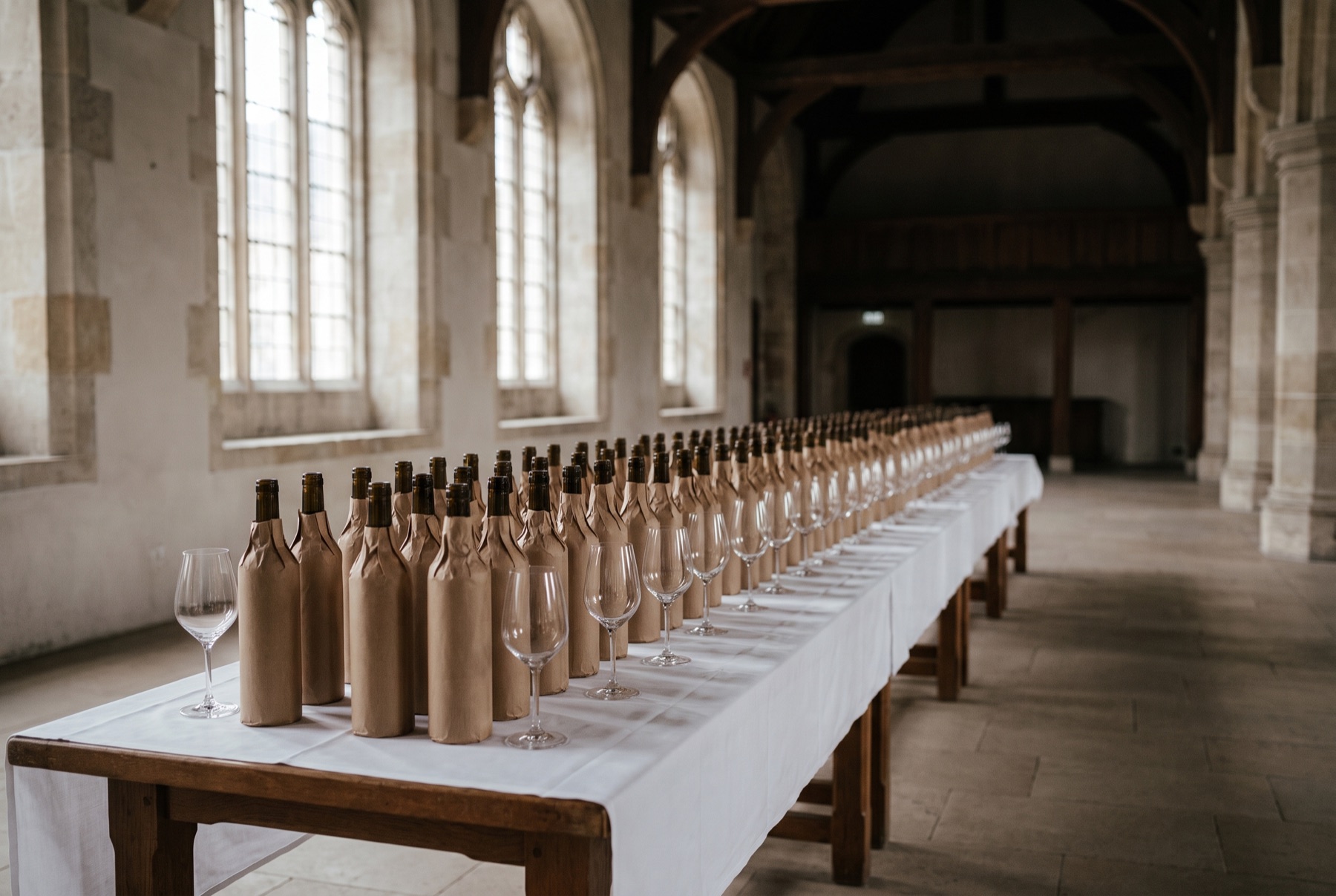
Citing methodological flaws it said had gone unexamined for precisely as long as the results have been unfavorable, the Fédération des Grands Vins de France announced Thursday that blind tasting is not a valid way to experience wine, sources confirmed. The ruling, delivered at the federation’s Paris headquarters, follows what officials called a half-century of growing methodological concern, a period that began, upon review, in 1976.
“The blind format removes the single most important element of a great wine, which is knowing that it is a great wine,” said federation president Hugo de Vermeille, whose organization has not won an impartial blind tasting since 1975. “Served without its label, a first growth of immense pedigree can be mistaken for — and I say this with real sorrow — a wine from somewhere. That is not a flaw in the first growth.”
The review was prompted by a tasting in Copenhagen in May, at which a $29 Cabernet from Lodi placed ahead of three classified Bordeaux. The federation initially attributed the result to the glassware, then to the lighting, then to the Danes, before commissioning the 60-page white paper released Thursday, which locates the flaw in blindness itself. The paper, titled “On Seeing,” argues that the perception of a wine properly begins with its label, its price, and, where possible, a short film about the family.
De Vermeille stressed that the federation’s own competitions remain rigorously objective, noting that its judges are told nothing about the wines “except which ones are ours.” Sensory scientists responded that blind tasting exists specifically to remove that kind of bias, a finding de Vermeille described as hurtful. Presented with four decades of peer-reviewed results, he asked whether the reviewers were French.
At press time, the federation unveiled its new competition format, in which the labels are visible and the wine is not poured. The results have already been announced.
More from Trade
Distributor Penalized $12.5 Million For Bribing Grocery Buyers Asks Judge If He's Ever Been To Cabo
Company offered prosecutor a fishing trip at 9:15 a.m., a casino weekend at 9:20.