
Wine Industry Pivots To Alcoholism
Alliance redirects $12 million toward the eleven percent of drinkers already moving most of the volume.
Facing a fourth consecutive year of volume decline, members of the National Vintners Alliance concluded at a closed-door session Tuesday that the category’s remaining obstacle is that its customers are not drinking themselves to death quickly enough, sources confirmed. “We went through it all afternoon and there’s no way around it. A guy who has two glasses on a Friday is a rounding error, and we’ve got ninety million of him,” said Dale Ostrander, 54, vice president of category strategy, gesturing at a slide that broke out per-household consumption alongside a column labeled REMAINING YEARS. “We’ve lost the moderation argument. Fine. We can’t beat a canned mocktail on price or on whatever it is that makes a 26-year-old want to be conscious on a Sunday morning. So we stop trying. Eleven percent of drinkers already move most of the volume in this country, and our position going forward is that those people can do more.”
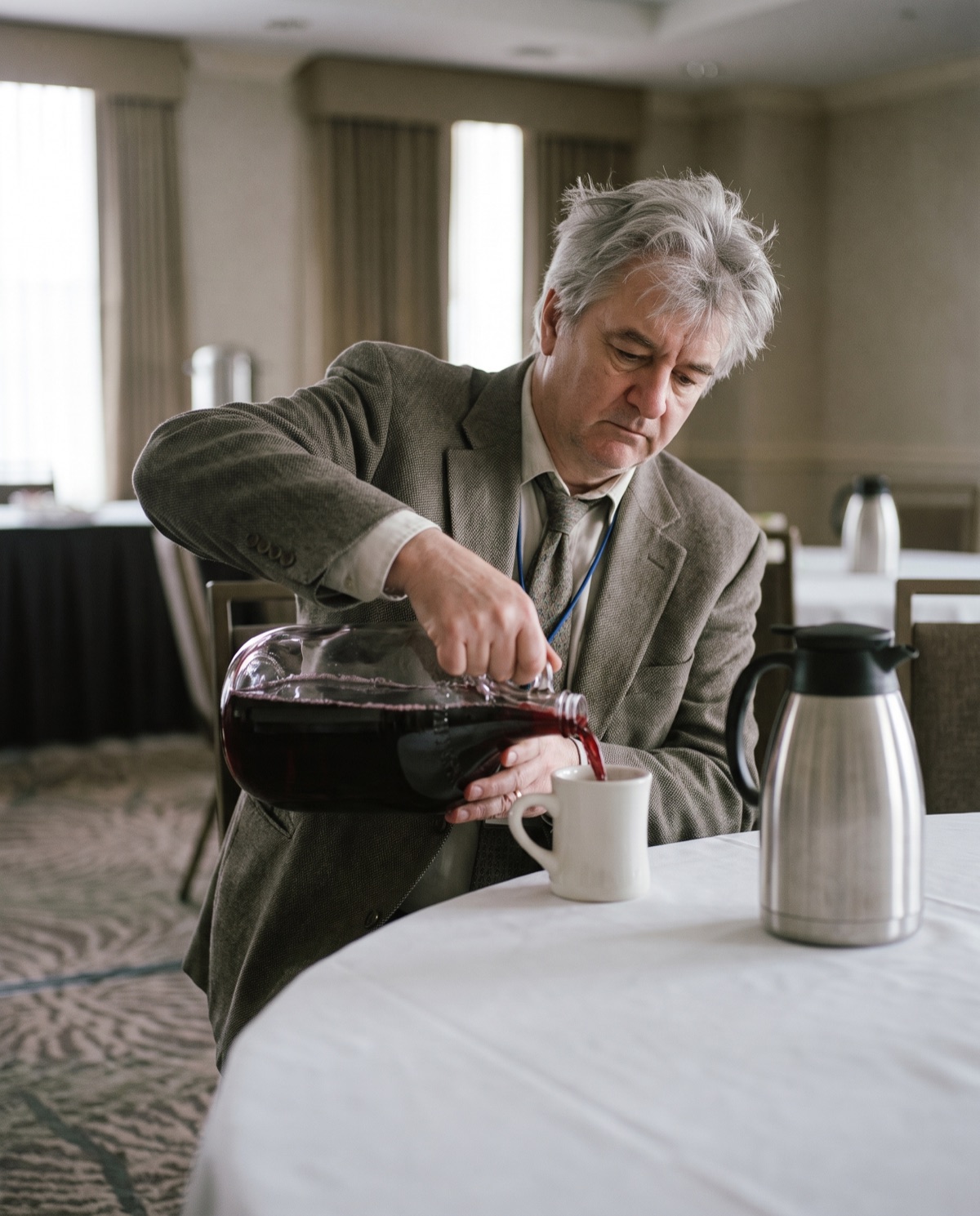
According to attendees, the Alliance voted 34–2 to redirect $12 million in media spend toward what its planning documents call high-frequency household penetration, beginning with the retirement of the 750ml bottle as the category’s default unit in favor of heavier promotion around 3- and 5-liter jug formats. “The jug is the honest package. Nobody’s pretending,” Ostrander said. “It’s even got a screwcap. We heard people like that.” When a reporter from this publication raised the well-documented relationship between heavy drinking and esophageal cancer, cirrhosis, and early death, Ostrander said the group had anticipated the question and distributed a one-page summary of Blue Zones research from the Nuoro province of Sardinia, where residents drink local Cannonau daily and routinely reach 100. “So we’re not shortening anybody’s life. We’re extending it,” he said, adding that the Alliance’s legal team had cleared the claim for point-of-sale use. “We turn them into raging alcoholics and they live longer. That’s a win-win. I don’t know what else you people want from me.”

Ostrander acknowledged the strategy carries some risk, chiefly that the Alliance’s most valuable consumers are also the ones most likely to stop buying wine without warning. He said the organization has modeled that attrition and believes it can be offset through aggressive recruitment at the entry level, pointing to My First Wino, a $24.99 starter set containing a weighted plastic goblet, a laminated aroma wheel, and a soft-sided carrying tote, recommended on the box for ages four and up. At press time, the Alliance had begun drafting a follow-up resolution on whether the four to six hours per night currently lost to sleep could be recaptured through caffeinated jug wine.
More from Business

Study Finds Young People Avoiding Wine For Every Reason Except Price
Trade group identifies 41 contributing factors.
Private Equity Firm Preserves Family Legacy By Keeping Signature On Label
Chicago firm acquires Dry Creek estate for $61 million.

Winery Restructures Into Leaner, More Agile One Guy
Central Coast producer cites flat organizational structure.